
Landscaping business financing is a match between a specific expense and a repayment schedule your slow months can still carry. A zero-turn mower, a crew's spring payroll, and a commercial bid that starts before the customer pays are three different cash problems. The National Association of Landscape Professionals cites IBISWorld figures showing U.S. landscaping services at about $188.8 billion in 2025 across roughly 693,000 businesses. Demand is real. A growing market still does not make every payment affordable.
Call (949) 990-5443 to review financing options for your landscaping business
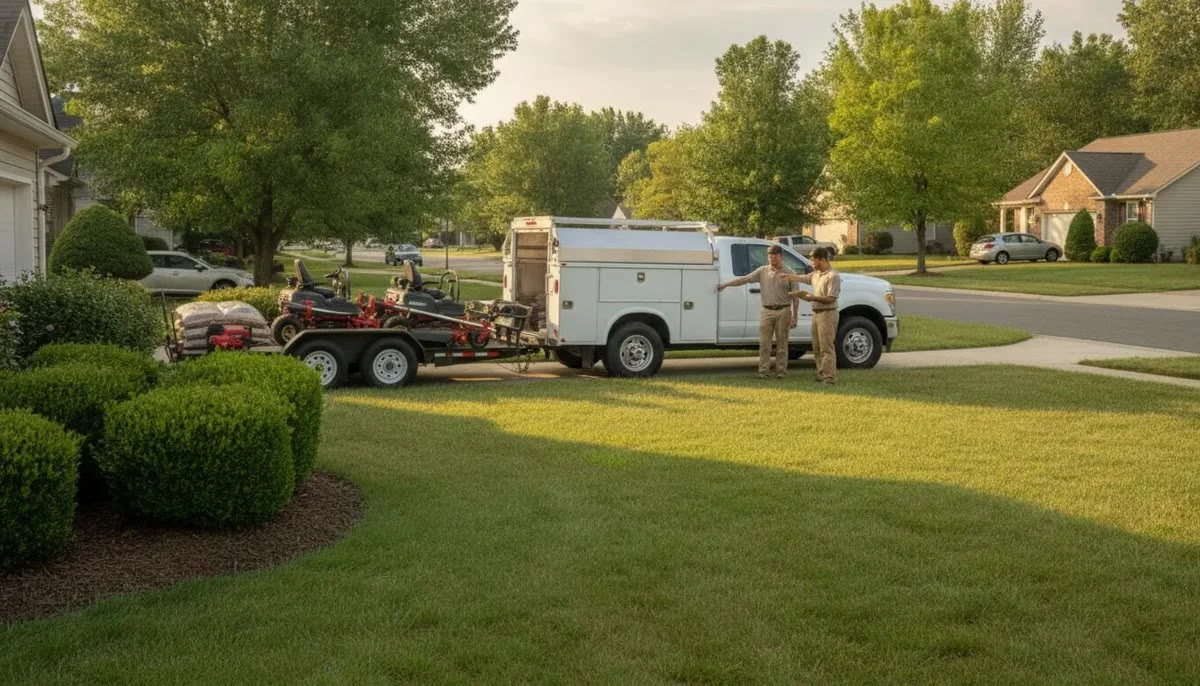
ThinkBiz Capital Group helps business owners look across a lender network. The services page lists an advertised funding range of $5,000 to $5 million and a complimentary consultation. That range is not an offer, a rate, or a promise that a landscaping company will be approved. Timing and terms depend on the lender and the file. This guide is for an operating lawn-care or landscape company, not a startup checklist.
What should landscaping business financing solve?
Start with the job the money has to do. The industries page names four landscaping needs: bidding on large projects, seasonal funding, equipment, and staff growth. Those are use cases, not four guaranteed products.
Write the need in one sentence before you compare structures:
Replace or add a machine. A mower, trailer, truck, or skid steer has a resale value and a useful life. The question is whether the machine earns enough to cover its payment after fuel, repairs, and insurance.
Carry a season. Payroll, mulch, plants, and fuel often go out before residential routes and commercial contracts catch up. The question is which months the payment still has to be made.
Take a larger bid. Materials and labor can be due before the first draw. The question is when that customer actually pays, not when the contract is signed.
Add a crew or a service. A second crew needs wages, a vehicle, and weeks of route-building before it covers its cost. The question is how long that ramp lasts.
If the sentence is "we need money for the business," stop and split it. Lenders and you will both make a cleaner decision when the use of funds, the amount, and the payoff month are separate.
Which expense is actually driving the request?
Landscaping cash moves in bursts. A maintenance route can look steady in July and thin in January. A design-build job can look profitable on paper and still miss payroll if the deposit was spent on plants and the progress payment slips.
Equipment that earns on routes
Mowers, aerators, trenchers, trailers, and work trucks are easier to explain than a general cash request because the asset is visible. Still separate three numbers: the purchase price, the cash you can put in, and the monthly cost of running it. A machine that sits through the off-season does not stop needing payments. Heavy equipment financing covers how asset-backed structures work in general. Use that page for the mechanics, and use this one to decide whether the machine is the real gap.
Payroll, materials, and the shoulder season
Crew wages, workers' compensation, fuel, and job materials do not wait for good weather. A working-capital request should name the months it covers and the revenue that is supposed to retire it. If last winter required the same advance, you may be funding a permanent gap rather than a season. The working-capital loan guide walks through that product. Here, the test is whether your maintenance contracts and spring start-up actually refill the account.
A bid that pays later than it costs
A commercial or municipal-style job can require mobilization, subcontractors, and materials before the first invoice is paid. That is a timing gap, not proof the job is a good use of long-term debt. List the deposit, each expected draw, and the latest date you have actually been paid by this customer or by similar ones. A bridge only helps if the receivable is real and the job still profits after the financing cost.
Which financing structure might fit?
ThinkBiz lists equipment financing, working-capital financing, business lines of credit, bridge loans, traditional financing, and SBA loans among its categories. None of those labels is a commitment to fund a landscaping company, and the site does not publish product-level rates or terms. Use the table to narrow the conversation, then confirm the lender, cost, and rules on any offer.
| Need | Structure to discuss | Why it can fit | What to verify |
|---|---|---|---|
| A mower, trailer, or truck. | Equipment financing. | The asset can support the request. The term can follow its useful life. | Check the down payment. Ask what happens if you sell the machine. Ask whether payments run through the off-season. |
| Spring payroll, plants, and fuel. | Working capital or a seasonal facility. | The need is short. Busy months should repay it. | Check whether the payment stays fixed through winter. Ask what happens if contracts slip. |
| Recurring, uneven expenses. | Business line of credit. | You can draw when a job starts. You can pay it down when invoices clear. | Check draw fees. Ask whether the lender can reduce the line. Compare it with a term loan. |
| One large job with a known pay date. | Bridge financing. | The gap has a start and an end. It is tied to a receivable. | Ask what happens if the customer pays late. Price the total cost of carrying that gap. |
| A multi-year expansion the business can document. | Traditional term financing or an SBA-guaranteed loan. | A longer repayment can fit a lasting increase in capacity. | Confirm time in business and use of proceeds. Do not use a long term to hide a cash shortfall. |
A line of credit and a term loan solve different problems. The line of credit versus term loan comparison is the place for that choice. For a one-job timing gap, read the bridge loan guide before you treat the bid as long-term debt.
Where an SBA-guaranteed loan sits
The U.S. Small Business Administration's 7(a) loan program is a guaranty to participating lenders, not a loan you apply for directly from the SBA. SBA states that 7(a) proceeds can include short- and long-term working capital, machinery and equipment, and furniture, fixtures, and supplies, with a maximum loan amount of $5 million. Eligible businesses must be operating, for-profit, located in the United States, small under SBA size standards, creditworthy, and able to show they can repay. They also must be unable to obtain the desired credit on reasonable terms from non-government sources.
That is a program description, not a ThinkBiz approval path. ThinkBiz does not claim to be an SBA lender. If a longer-term option belongs in your file, ask which lender would consider it and how the use of proceeds would be documented. Do not assume a landscaping company automatically fits, and do not plan on the same timeline as a short-term working-capital review.
How do you test a slow month before you borrow?
A July bank balance is a poor guide to a January payment. Build a 12-month view from the last full year, then lay the new payment on top of it.
List monthly deposits from maintenance contracts, one-time jobs, and snow or other off-season work if you have it. Use collected cash, not bids you hope to win.
List payroll, fuel, materials, insurance, rent, existing loan payments, and owner draws. Keep the draw in the picture. A payment that only works if you skip your own pay is not affordable.
Add the proposed payment in every month it would be due, including months with little revenue.
Drop the single largest commercial customer for one month and see if payroll still clears. A bid-driven company can lose a draw without losing the crew.
If the equipment only earns in the growing season, test a late spring. A rainy April does not move the due date.
The business loan calculator can turn an amount, a term, and a rate you were actually quoted into a payment. It cannot supply a rate ThinkBiz has not published, and a calculator result is not an offer. If you do not have a quoted rate, compare structures first and run the numbers only after a lender puts a cost in writing.
Pass the test only if the slowest month still covers payroll, the new payment, and a small cushion. If it fails, reduce the amount, shorten the season the money has to cover, or delay the purchase. Stretching the term to shrink the payment can make a weak job look affordable while raising the total you repay.
What will a lender usually want to see?
ThinkBiz's homepage asks applicants to prepare four months of business bank statements, a business voided check, a valid driver's license, and proof of business ownership. Those are document requests, not a complete underwriting list and not a promise that four months in business is enough. The company's own target screen is an owner with more than $20,000 in monthly revenue, at least six months in operation, a business checking account, and no current default. Site copy also says some businesses with less-than-perfect credit may qualify. Treat both as starting points a lender can narrow, not as a score you have already met.
For a landscaping file, add context those four documents do not show.
A one-page use of funds that ties each dollar to a machine, a payroll period, or a named job.
The last 12 months of revenue by month, so seasonality is visible instead of averaged away.
Maintenance agreements or a bid log if the request depends on work you have not collected yet.
A list of equipment you already own and anything still being paid off.
A short note on who the customer is. A homeowner route, a property manager, and a general contractor pay on different cycles.
The bank-statement guide explains how deposits, transfers, and overdrafts tend to be read. Large cash deposits from residential jobs and transfers between an owner and the business are common in this trade. Label them so they are not mistaken for unexplained funds.
Questions worth asking before you accept
Who is the lender, and is this a loan, a line, or another structure?
What is the full cost over the life of the financing, including fees, not only the periodic payment?
Can you prepay, and does the cost change if you do?
What secures it: the machine, a blanket business lien, a personal guarantee, or some combination?
What happens in a month when collected revenue drops below the payment?
How long does this lender's review usually take for a file like yours? "Often within a few days" on the services page is not a deadline.
The comparison guide is a useful checklist once two offers are actually in hand. Comparing labels before you have costs will not tell you which one is cheaper.
When is financing the wrong tool?
Borrowing is a poor fit in three cases. The payment depends on revenue you have not won. The equipment does not earn its keep outside a short season. Or you are stacking a new payment on one the business already struggles to make. A second crew that needs months to fill a route is a hiring plan first. Financing the truck before the route exists moves the risk onto a fixed due date.
A large bid with a vague pay schedule has the same problem. If you cannot name the draw dates, a bridge just locks in a cost against a hope. Ask the customer for a payment schedule, or scale the mobilization to the deposit you have, before you price the gap.
Financing can fit when the asset or the contract is specific, the slow-month test still works, and the term does not outlive the machine or the job. Owners comparing a purchase with a financed payment sometimes also ask about tax treatment. Read equipment financing tax questions with your own tax professional. Nothing on this page is tax advice, and an equipment structure is not automatically the lower-cost choice.
If the use of funds and the slow-month test are clear, start a financing application or call (949) 990-5443 to talk through the options a lender would need to review.
Frequently asked questions
Can a newer landscaping company qualify?
Maybe, but nothing on this site guarantees it. ThinkBiz's stated target is at least six months in business and more than $20,000 in monthly revenue, while some marketing also addresses early-stage firms. A lender decides from the file. A short history usually means a smaller, more specific request, such as one machine with a clear route behind it, is easier to explain than a general growth loan.
Can one financing request cover both a mower and payroll?
It can be discussed, but mixing them makes the file harder to judge. Equipment can support an asset-backed request. Payroll is a cash-flow need with no resale value. If you combine them, show each use separately and test the single payment against your slowest month. A lender may still prefer to split them.
Does the $5,000 to $5 million range mean a landscaping business can borrow that much?
No. That is the overall range advertised across ThinkBiz's lender network, not a preapproved amount for any company or any product. The amount that matters is the one a specific lender offers after reviewing revenue, deposits, and the use of funds.
Is equipment financing always cheaper than paying cash?
No. Financing preserves cash, and it adds a cost. Paying cash can be the better move when the purchase would empty the account you need for payroll and materials. Run the payment through a slow month before you decide that keeping cash is worth the financing cost.
What if a customer pays after the due date?
Treat that as a collection problem first. A bridge or a line only helps when you know the invoice is valid and you can carry the payment if it slips. Before you borrow against a job, write down the latest you have been paid by that customer and ask what the offer requires if the draw is late.
